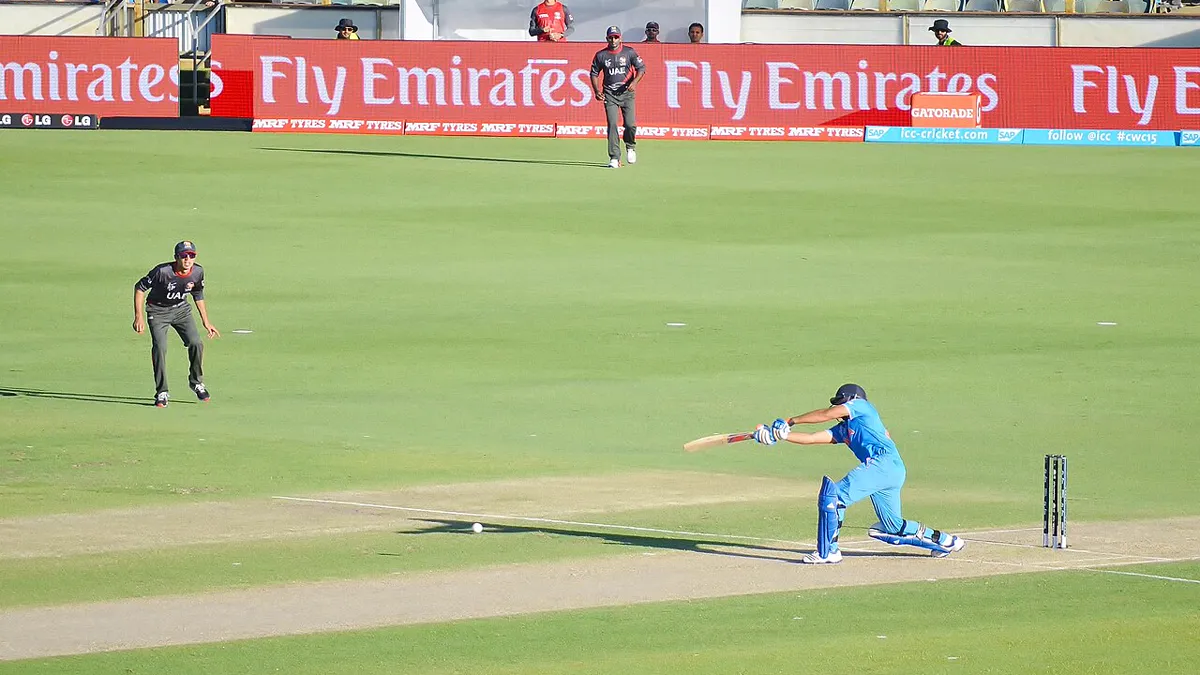
What is powerplay in cricket? It is the opening block of a limited-overs innings when only two fielders may stand outside the 30-yard circle. In an ODI it is the first 10 overs, and in a T20 it is the first 6 overs. With so few fielders guarding the boundary, batters attack freely and bowlers hunt for early wickets, so the powerplay often sets the shape of the whole match.
The rule sounds simple, but it changes how captains set fields, how openers bat, and how a chase is planned. If you are still learning to follow a match, our guide to reading a cricket scorecard explains the numbers on the screen, and the Super Over is the other limited-overs rule every fan should know.
Last updated: 16 November 2026.
What is powerplay in cricket and how does it work?
So what is powerplay in cricket in practice? It is not one rule but a set of fielding restrictions that apply for a fixed block at the start of each innings in limited-overs cricket. The fielding side must keep most of its fielders inside the 30-yard circle, which leaves the boundary open and rewards batters who hit over the infield. The exact overs and limits depend on the format, and the ICC has changed the details as recently as 2025.
Three things stay the same in every format. First, the powerplay always starts at the beginning of the innings. Second, the limit is counted at the instant the bowler delivers the ball, not where a fielder ends up afterwards. Third, the powerplay is a playing condition set by the ICC, not part of the MCC Laws of Cricket, so domestic leagues can vary it.
The 30-yard circle explained
The 30-yard circle is the marked area that decides every powerplay limit. It is not a true circle. It is two semicircles, each with a radius of 30 yards (27.43 metres) from the middle stump at each end, joined by two straight lines parallel to the pitch. Fielders inside the line are in the ring; fielders outside it are in the deep.
The circle matters because the powerplay counts fielders outside it. A fielder standing on the line counts as inside. During the powerplay, the fielding captain must fit almost the whole team inside that ring, which is why you see slips, a short cover and a mid-wicket crowded in, with only two fielders allowed to patrol the boundary.
Powerplay rules in ODI cricket
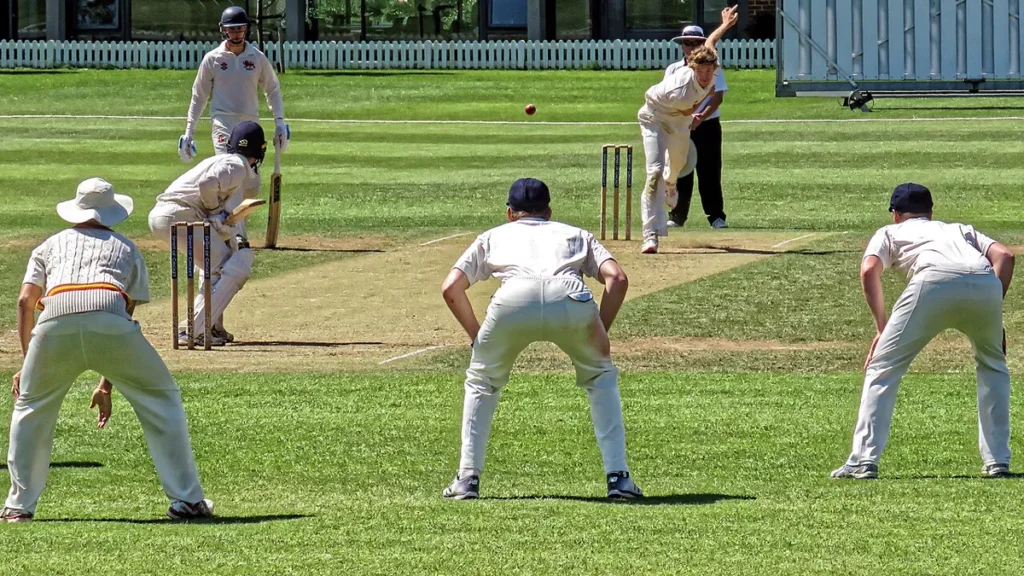
A 50-over innings splits into three phases, fixed since the ICC scrapped the optional batting and bowling powerplays in 2015. The limits rise as the innings goes on, so the field spreads out in stages.
| Phase | Overs | Fielders allowed outside the circle |
|---|---|---|
| Powerplay 1 (mandatory) | 1 to 10 | 2 |
| Powerplay 2 (middle overs) | 11 to 40 | 4 |
| Powerplay 3 (final overs) | 41 to 50 | 5 |
The first 10 overs are the most attacking phase of an ODI. With only two fielders outside the circle, openers can hit over the infield with little risk of being caught on the boundary. The middle 30 overs let the fielding side protect four boundary spots, which is when spinners usually bowl. The last 10 overs allow five out, so captains can guard the ropes while death bowlers aim for yorkers.
Before 2015 the structure was different. Teams had a 10-over mandatory powerplay plus two five-over blocks, one chosen by the fielding captain and one by the batting captain. The ICC removed the optional blocks in 2015 and fixed the three phases above, so every ODI now follows the same pattern.
Powerplay rules in T20 cricket
A 20-over innings has a single powerplay: the first six overs, with only two fielders outside the circle. From over seven onwards, five fielders may stand outside. The IPL follows the same T20 structure.
| Phase | Overs | Fielders allowed outside the circle |
|---|---|---|
| Powerplay | 1 to 6 | 2 |
| Rest of the innings | 7 to 20 | 5 |
Six overs is 30 percent of a T20 innings, which is why the powerplay matters so much in this format. A team that scores heavily in the first six overs can win the match in the first half of its innings, and a team that loses three wickets in the powerplay rarely recovers. Bowlers use the new ball’s swing and seam in this phase, because once the field spreads, boundaries are harder to stop.
What happens when a team breaks the powerplay rules?
If a third fielder is outside the circle during the powerplay at the instant of delivery, the square-leg umpire calls no-ball. The batting side gets a run, the ball must be bowled again, and the next delivery is a free hit, so the batter cannot be dismissed except by a run out.
The same umpire also watches the leg-side limits, which apply in every format, powerplay or not. No more than five fielders may stand on the leg side, and no more than two of them may stand behind square on the leg side. These limits come from the MCC Laws, not the powerplay rules, and they apply in Test cricket too.
There is one more penalty that changes the field. A fielding side that falls behind the required over rate must bring an extra fielder inside the circle for the overs it is short. The ICC introduced that penalty in T20Is in January 2022 and extended it to ODIs in 2023.
Is there a powerplay in Test cricket?
No. Test cricket has no powerplay and no 30-yard circle restrictions. The captain may place all nine fielders anywhere on the field, including all of them on the boundary if the match situation calls for it.
The only fielding limits in Tests are the ones in the Laws: no more than five fielders on the leg side and no more than two behind square on the leg side. That freedom is one reason Test cricket looks so different from white-ball cricket, with attacking fields of four slips and a gully that would be illegal in an ODI powerplay.
How teams use the powerplay
Batting first, openers use the powerplay to score quickly while the field is in. The usual plan is to hit over the infield rather than along the ground, because a mistimed shot is less likely to find a fielder on the boundary. A strong powerplay puts the batting side ahead of the asking rate before the field spreads.
Bowling sides have two answers. The first is swing and seam with the new ball, which is why the best new-ball bowlers open the bowling. The second is to take wickets, because a new batter faces the same restricted field and must score from the first ball. In T20s, captains sometimes open with a spinner, betting that turn beats the bat even with the field in.
Powerplay rules in women’s cricket and the IPL
Women’s international cricket uses the same powerplay structure as the men’s game: 10 overs in ODIs and six overs in T20Is, with the same two-fielder limit. The ICC updated the women’s playing conditions in October 2025 to match the men’s nearest-ball calculation for shortened T20Is.
The IPL follows the standard T20 powerplay of six overs. One rule that is not part of international cricket is the Power Surge, used in Australia’s Big Bash League, where the batting side picks two extra overs later in the innings with only two fielders outside the circle. It is a league variation, not an ICC rule.
Rain-shortened matches: how the powerplay shrinks
When rain cuts an innings short, the powerplay shrinks with it. In T20Is, the ICC changed the calculation in July 2025: the powerplay is now rounded to the nearest ball instead of the nearest over, so it stays close to 30 percent of the innings. An eight-over innings has a powerplay of 2.2 overs, a nine-over innings has 2.4 overs, a five-over innings has 1.3 overs, and a 15-over innings has 4.3 overs. The umpire signals the end of the powerplay in the middle of an over, and three more fielders move out to the boundary.
In ODIs, the three phases shrink in proportion under the ICC table, so a rain-shortened match has a shorter first powerplay and shorter middle and final phases. If you want to know how the target is reset in those matches, our DLS method explained guide covers the Duckworth-Lewis-Stern calculation.
The nearest-ball method was already used in England’s T20 Blast before the ICC adopted it for men’s T20Is in July 2025.
Powerplay in ODI, T20 and Test cricket at a glance
| Format | Powerplay overs | Fielders outside the circle |
|---|---|---|
| ODI (50 overs) | Overs 1 to 10 | 2 (then 4 in overs 11 to 40, 5 in overs 41 to 50) |
| T20I (20 overs) | Overs 1 to 6 | 2 (then 5 from over 7) |
| Test | None | No circle limit |
FAQs
How many overs is the powerplay in ODI cricket?
The powerplay is the first 10 overs of a 50-over innings, when only two fielders may stand outside the 30-yard circle. After that, four fielders may stand outside from overs 11 to 40, and five from overs 41 to 50.
How many overs is the powerplay in T20 cricket?
The powerplay is the first six overs of a 20-over innings, with only two fielders outside the circle. From the seventh over onwards, five fielders may stand outside.
Is there a powerplay in Test cricket?
No. Test cricket has no powerplay and no 30-yard circle restrictions. Captains may place fielders anywhere, within the leg-side limits in the Laws.
What is the penalty for breaking the powerplay rules?
The square-leg umpire calls no-ball. The batting side scores a run, the ball is bowled again, and the next delivery is a free hit.
Is the powerplay the same in women’s cricket?
Yes. Women’s ODIs and T20Is use the same powerplay structure as the men’s game, and the women’s playing conditions were updated in October 2025 to match the men’s nearest-ball calculation for shortened T20Is.
What is the 30-yard circle in cricket?
It is the marked fielding restriction area: two semicircles of 30 yards (27.43 metres) radius from the middle stump at each end, joined by two straight lines parallel to the pitch.
What is a Power Surge in cricket?
A Power Surge is a Big Bash League rule, not an international one. The batting side picks two overs later in the innings when only two fielders may stand outside the circle.
Final Thoughts
The powerplay is the simplest rule in limited-overs cricket to understand and one of the hardest to play well. Two fielders outside the circle for the first 10 overs of an ODI or the first six of a T20, then the field spreads and the match changes shape. Once you can see the circle and count the fielders outside it, you can read every limited-overs match the way captains do.
Watch the next powerplay live on our cricket live score page and count the fielders outside the circle as the overs tick by.
Sources: Cricbuzz (ICC tweaks PowerPlay rules for shortened T20Is) and MCC (About the Laws of Cricket).