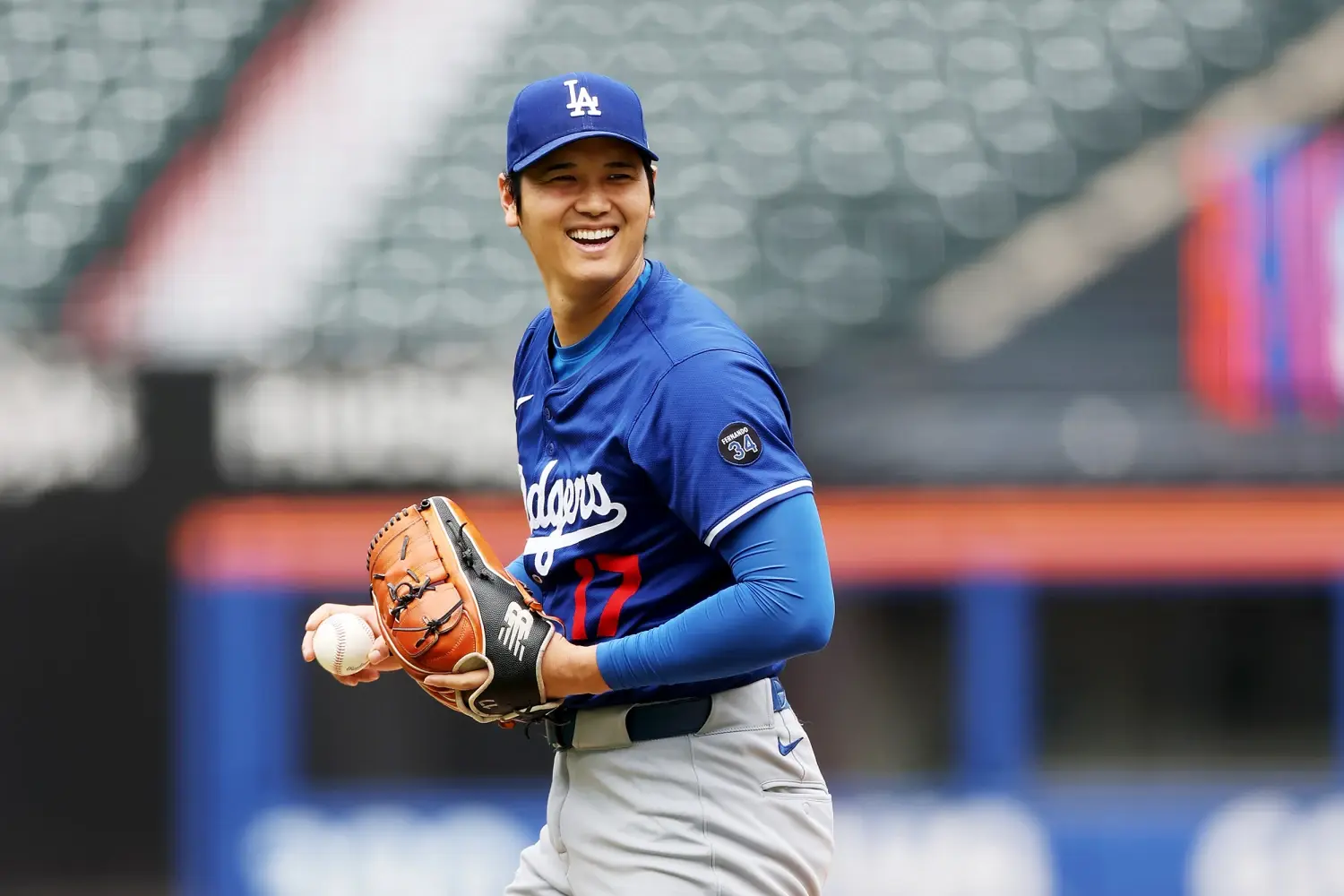
Shohei Ohtani: Baseball’s Two-Way Marvel
Baseball hasn’t seen a genuine two-way star operate at an elite level in both pitching and hitting since Babe Ruth, nearly a century ago. Shohei Ohtani has spent his career making that comparison feel almost understated — four MVP awards, back-to-back World Series titles, and a contract that was the largest in the sport’s history when signed in December 2023.
From the Angels to a record-breaking Dodgers deal
Ohtani was born on 5 July 1994 in Oshu, Japan, and made his MLB debut in 2018 after signing with the Los Angeles Angels, spending six seasons there and establishing himself as a genuine sensation on both sides of the ball. He signed with the Los Angeles Dodgers in December 2023 on a ten-year, $700 million contract — the largest contract in baseball history when signed in December 2023, structured with heavy salary deferrals that allowed the Dodgers to keep building a competitive roster around him.
Juan Soto’s 15-year, $765 million deal with the New York Mets in December 2024 later surpassed it as the largest in baseball history. “I can say 100 percent that you, the Dodger organization and I share the same goal — to bring World Series parades to the streets of Los Angeles,” Ohtani said at the time.
The deal paid off almost immediately
The Dodgers’ bet has been thoroughly vindicated. Ohtani has helped deliver back-to-back World Series championships in his first two seasons with the club, and reports suggest the team recouped the entire value of his contract in his first season alone through ticket sales, marketing deals across Japan and the broader international market, and merchandise — before even accounting for what he continues to produce on the field. One prominent ranking placed the signing 19th among the greatest free-agent contracts in MLB history just two seasons in, with analysts suggesting it could climb even higher as his production continues.
Four MVP awards
Ohtani won back-to-back American League MVP awards with the Angels, becoming the first player in MLB history to win the award unanimously more than once, and has added National League MVP honours in each of his first two seasons with the Dodgers — four MVP awards in total across a career that’s still very much in its prime. His numbers across that stretch have been genuinely historic: leading the league in home runs, on-base percentage, slugging percentage, and OPS in his final Angels MVP season, while also ranking among the league’s pitching leaders in the same campaign — a two-way statistical profile essentially unmatched in the modern game.
Back on the mound in 2026
Ohtani has resumed pitching full-time in the 2026 season after a period focused primarily on hitting, and the results have been outstanding: an 8-2 record across 14 starts with a 1.79 ERA and a 0.95 WHIP, striking out 9.98 batters per nine innings against just 2.73 walks. At the plate, he’s continued producing at an elite level too, with 22 home runs and 61 RBIs through the season alongside a .286 batting average. His combined career numbers now stand at 302 home runs, 730 RBIs, a .282 batting average, and 171 stolen bases, alongside his pitching statistics built across parts of nine MLB seasons.
Managing the two-way workload
Ohtani’s dual role inevitably comes with genuine physical demands, and the Dodgers have had to carefully manage his workload at times — including a recent stretch of knee irritation that limited his pitching appearances, with the team taking a deliberately cautious approach to his return to the rotation rather than rushing him back. It’s the kind of ongoing management question that comes with asking one player to do the job of two, arguably the most physically demanding role in professional sports.
Where his career stands
Shohei Ohtani’s career already includes two World Series titles, four MVP awards, and a $700 million contract that’s already looking like a bargain barely two seasons in — a genuinely rare combination of individual brilliance and team success sustained across two different franchises. With his return to full-time two-way duty in 2026 going smoothly, there’s little reason to expect his historic production to slow down anytime soon.
Quick facts
Full name: Shohei Ohtani | Born: 5 July 1994, Oshu, Japan | Team: Los Angeles Dodgers | Notable: Four-time MVP (2x AL with Angels, 2x NL with Dodgers), two-time World Series champion, largest contract in baseball history ($700 million/10 years), genuine two-way starter and elite hitter.
Frequently asked questions
What team does Shohei Ohtani play for?
The Los Angeles Dodgers, whom he joined in December 2023 on a ten-year, $700 million contract.
How many MVP awards has Shohei Ohtani won?
Four — two American League MVPs with the Angels and two National League MVPs with the Dodgers.
Has Shohei Ohtani won a World Series?
Yes, twice — in each of his first two seasons with the Dodgers.
Is Shohei Ohtani still pitching in 2026?
Yes — he returned to full-time pitching duty in 2026, posting an 8-2 record with a 1.79 ERA through his first 14 starts.
What is Shohei Ohtani’s contract worth?
Ten years, $700 million, the largest contract in MLB history, signed with heavy salary deferrals.
How Ohtani’s $700 Million Contract Actually Works
The headline number is $700 million over ten years, but the way the money flows is what makes Shohei Ohtani’s Dodgers contract genuinely historic. During the playing years of the deal (2024–2033), Ohtani receives just $2 million per season in cash — $20 million total. The remaining $680 million is deferred and paid out at $68 million per year from 2034 through 2043, long after the contract’s playing term ends, with no interest accruing on the deferred amounts.
This structure dramatically changes how the contract counts against MLB’s Competitive Balance Tax. Under the league’s collective bargaining rules, deferred compensation is valued at its present-day worth rather than its nominal total. MLB calculated the present value of Ohtani’s deal at roughly $460 million, producing an annual CBT figure of about $46 million instead of the headline $70 million average. That roughly $24 million annual gap is what made the contract workable for the Dodgers’ payroll — and it is why the deferral, proposed by Ohtani himself according to MLB, was the financial centerpiece of the entire negotiation. Without it, the deal as constructed simply does not happen.
Why Ohtani Deferred $680 Million of His Own Money
Deferring the vast majority of a record contract sounds irrational until you understand Ohtani’s priorities. By taking only $2 million a year during the playing term, he gave the Dodgers the payroll flexibility to build a championship roster around him — and the results speak for themselves, with World Series titles in each of his first two seasons in Los Angeles. The freed-up CBT room helped the club add elite talent like Yoshinobu Yamamoto, Tyler Glasnow, Blake Snell, Teoscar Hernández, and Tanner Scott without the luxury-tax bill exploding.
There is also a personal financial logic. Ohtani’s endorsement income — reportedly well over $100 million a year — dwarfs his $2 million playing salary, so the deferral costs him nothing in lifestyle terms. And because much of the deferred money will be paid after he is no longer a California resident, he may legally avoid California state income tax on a large portion of it, a quirk that drew public comment from California’s controller and a non-binding state senate resolution. Whatever one thinks of the tax angle, the deferral was a deliberate choice by a player who valued winning over immediate cash.
Endorsements, Net Worth, and the Business of Being Ohtani
Ohtani’s playing contract is only part of his financial story. His endorsement portfolio — spanning Japanese and global brands in apparel, finance, automotive, and consumer goods — reportedly generates over $100 million a year, making him one of the highest-paid athletes in the world by total income despite his tiny playing salary. His Dodgers jersey broke Fanatics’ 48-hour sales record at launch, and his presence supercharged the franchise’s marketing reach across Japan and the broader international market.
Independent estimates place his net worth in the range of $150–250 million as of 2026, though such figures are necessarily imprecise: they combine after-tax cash, investment returns, licensing revenue, and the present value of his guaranteed future compensation, much of which is not publicly disclosed. What is certain is that Ohtani is that rarest of athletes — one whose off-field earning power exceeds his on-field salary by an order of magnitude, and who structured the biggest contract in baseball history specifically so his team could keep winning.
The 50-50 Season: The Milestone That Made the Contract Look Cheap
In his very first Dodgers season, Ohtani delivered the signature achievement of the contract’s early years: the first 50-50 season in MLB history. On September 19, 2024, he went 6-for-6 with three home runs, two stolen bases, and 10 RBIs against the Miami Marlins to reach the milestone, finishing the season with 54 home runs and 59 stolen bases. He also set the record for most stolen bases in a season by a Japanese-born player, and his 50th home run ball later sold at auction for $4.39 million — a record price for any baseball.
The season earned him a unanimous National League MVP award, his third unanimous MVP overall, making him the first player in MLB history to win the award unanimously more than once. He followed it in 2025 by joining the 50-20 club for a second straight season. For a contract some questioned at signing, producing the greatest offensive season ever played in year one was quite the answer.
Frequently Asked Questions (new — append after existing FAQs)
How much of Shohei Ohtani’s $700 million contract is deferred?
$680 million of the $700 million is deferred. Ohtani receives $2 million per year during the ten playing seasons (2024–2033), with the remaining $680 million paid at $68 million per year from 2034 through 2043, with no interest.
Why did Ohtani agree to defer most of his salary?
The deferral was reportedly Ohtani’s own idea. By minimizing his annual Competitive Balance Tax hit (about $46 million instead of $70 million), he gave the Dodgers room to sign stars like Yamamoto, Glasnow, Snell, and Hernández around him — a strategy vindicated by back-to-back World Series titles.
What is Shohei Ohtani’s net worth?
Independent estimates place it in the $150–250 million range as of 2026, though exact figures are not publicly disclosed. His endorsement income, reportedly exceeding $100 million a year, far outweighs his $2 million annual playing salary.
What was Ohtani’s 50-50 season?
In 2024, Ohtani became the first player in MLB history to hit 50 home runs and steal 50 bases in a single season, finishing with 54 homers and 59 steals. He won the National League MVP unanimously for the achievement.
Is Ohtani’s $700 million contract still the biggest in baseball history?
It was the largest in professional sports history when signed in December 2023, but Juan Soto’s 15-year, $765 million deal with the New York Mets in December 2024 surpassed it. Unlike Ohtani’s heavily deferred contract, Soto’s deal contains no deferred money.
1 thought on “Shohei Ohtani Biography: Contract, MVPs & Career Stats (2026)”