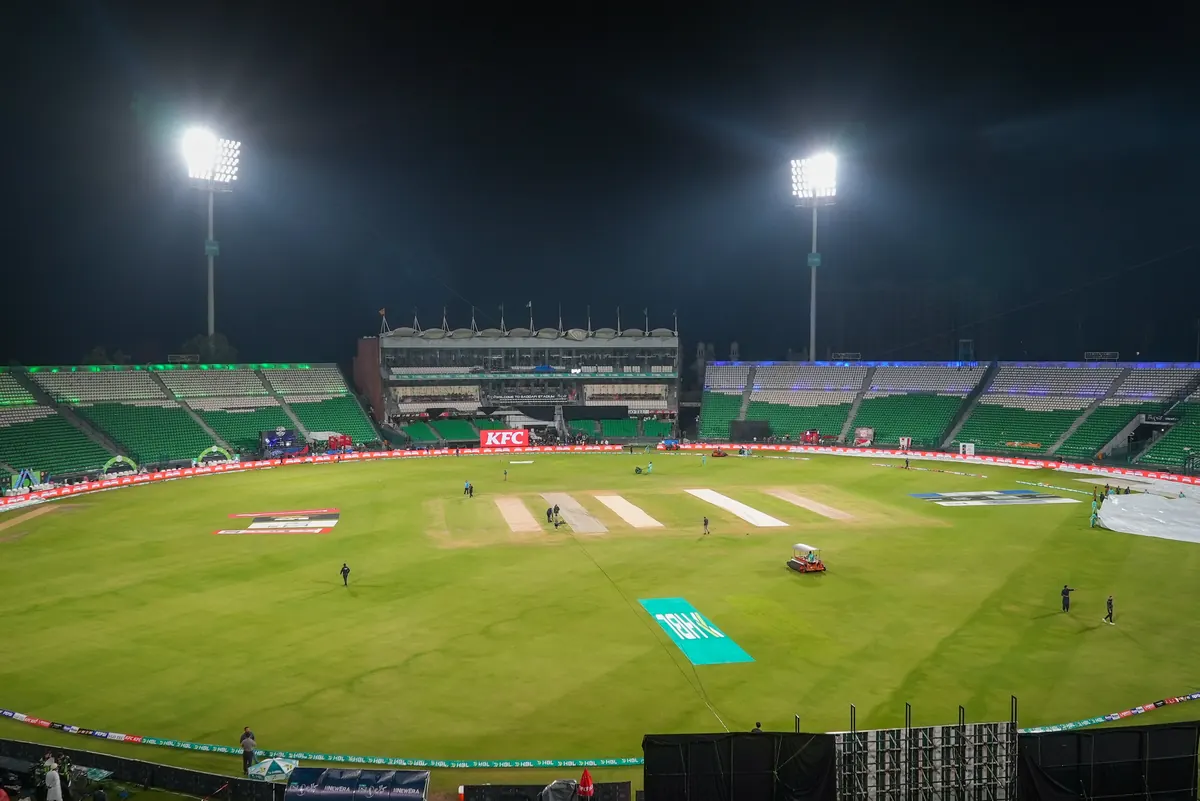
A PSL live score page is the fastest way to follow the Pakistan Super League ball by ball — every run, wicket, and over update lands there within seconds. But a live score is more than a moving number: hidden inside it are run rates, strike rates, bowling figures, and net run rate clues that tell you who is actually winning long before the result is official. This guide shows you how to read all of it, so the next time you open our PSL live score page, you will understand every line on the screen.
PSL Live Score Basics: What the Headline Number Means
The first thing you see on any PSL live score is the headline: something like Lahore Qalandars 186/4 (20 overs). It reads left to right — team name, runs scored, wickets lost, overs faced. The two numbers that matter most are the runs and the wickets: 186/4 means 186 runs for the loss of 4 wickets.
The overs figure needs a little decoding. In cricket, the number after the decimal point is balls, not tenths — 14.3 overs means 14 complete overs plus 3 balls of the 15th, not “fourteen point three” overs. Six legal balls make one over, so 14.3 is 87 balls bowled. When a chase is on, you will also see the target line: Karachi Kings need 42 runs from 30 balls, which instantly tells you the required run rate (42 ÷ 5 overs = 8.40 per over).
How to Read a PSL Scorecard Ball by Ball
Below the headline, the scorecard breaks the innings into batting and bowling sections. Each batter’s line shows runs, balls faced, boundaries, and strike rate — for example, Babar Azam 72 (48), 8×4, 2×6, SR 150.00 means 72 runs off 48 balls with eight fours and two sixes. An asterisk next to the score (72*) means the batter is not out.
Bowling figures read as overs-maidens-runs-wickets: 4-0-28-3 is 4 overs, 0 maidens, 28 runs conceded, 3 wickets taken. Two extra columns do the real talking — economy rate (runs per over) and dots. In the PSL, where 170-plus is a par score, a bowler going at under 7.50 an over in the death overs is doing elite work, even if the wicket column looks quiet.
Watch the “Fall of Wickets” line too: 42-1, 98-2, 121-3 shows the team score each time a wicket fell. A cluster of wickets in quick succession — say three wickets for twelve runs — is the clearest momentum signal on the page.
Run Rate, Strike Rate and Economy: Three Numbers That Matter
Three derived stats decide most PSL matches, and the live score computes all of them for you.
Run rate is the team’s scoring speed: total runs divided by overs faced. A team on 120/2 after 12 overs is going at 10.00 per over and heading for around 200. Compare it with the required run rate in a chase — if the required rate climbs above 12 with wickets in hand falling, the batting side is in trouble no matter how good the headline total looks.
Strike rate applies the same idea to a batter: (runs ÷ balls faced) × 100. In T20 cricket, anything above 140 is aggressive and anything below 110 is anchoring — or struggling. Context matters: a 60 (45) in a 130 chase is gold; the same score chasing 200 is a liability.
Economy rate is the bowler’s version: runs conceded per over. PSL powerplays (the first six overs, when only two fielders are allowed outside the 30-yard circle) usually go at 9-plus an over; a new-ball bowler holding it under 7 in that phase has effectively won his team the powerplay.
Net Run Rate Explained: Why PSL Teams Obsess Over It
Net run rate (NRR) is the tiebreaker that decides who reaches the PSL playoffs when teams finish level on points — and it produces some of the tournament’s most dramatic final-day mathematics. The formula is simple: NRR = (runs scored ÷ overs faced) − (runs conceded ÷ overs faced) across the whole season.
Here is a one-match example. Team A scores 180/6 in 20 overs (run rate 9.00). Team B is bowled out for 150 in 18 overs. Team B’s run rate is not 150 ÷ 18 — under the official rules, a team bowled out is deemed to have faced its full quota, so it is 150 ÷ 20 = 7.50. Team A’s NRR for the match is 9.00 − 7.50 = +1.50; Team B’s is −1.50.
Two subtleties most fans miss. First, only completed matches count — washed-out games are ignored entirely. Second, a big win late in the league stage can vault a team over rivals without them playing another ball, which is why teams chasing small targets sometimes sprint for a quick finish instead of coasting: every ball saved boosts NRR. When you check the PSL points table on our live score page in the final week, read the NRR column as carefully as the points.
PSL Format and Playoffs: Where Every Match Fits
The PSL plays a double round-robin: every team faces every other team twice, home and away in spirit if not always in venue. Two points for a win, one for a no-result, zero for a loss. The top four reach the playoffs, which follow this fixed structure:
| Stage | Matchup | What happens |
|---|---|---|
| Qualifier | 1st vs 2nd | Winner goes straight to the Final |
| Eliminator 1 | 3rd vs 4th | Loser is knocked out |
| Eliminator 2 | Qualifier loser vs Eliminator 1 winner | Winner reaches the Final |
| Final | Qualifier winner vs Eliminator 2 winner | Champion |
Finishing first or second is worth more than pride — it buys a second chance. Lose the Qualifier and you still get Eliminator 2; finish third or fourth and every playoff game is sudden death. That is why the last round-robin matches, even between mid-table teams, are often the tournament’s most intense: the difference between second and third is an extra life.
PSL Match Timings Around the World
PSL matches are scheduled for a global audience, and the two standard slots convert like this (evening games are the norm; afternoon games usually happen on double-header days):
| Slot | Pakistan (PKT) | UK (BST) | US Eastern (EDT) | India (IST) | Sydney (AEST) |
|---|---|---|---|---|---|
| Evening match | 7:00 PM | 3:00 PM | 10:00 AM | 7:30 PM | 12:00 AM* |
| Afternoon match | 2:30 PM | 10:30 AM | 5:30 AM | 3:00 PM | 7:30 PM |
*Next day.
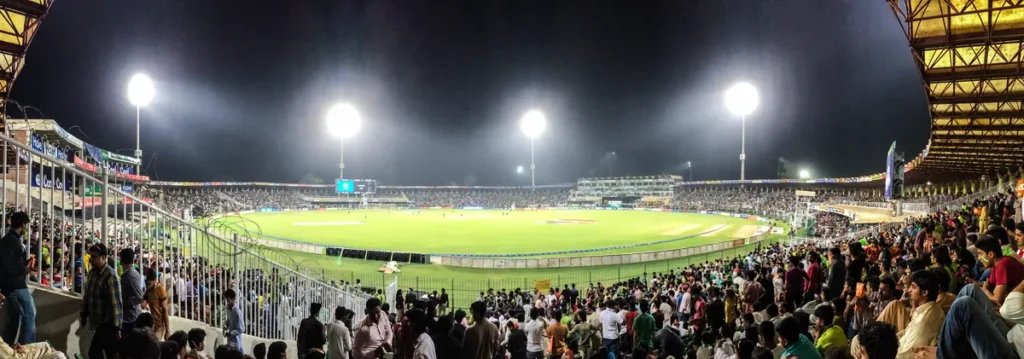
For fans in the Americas the evening slot means a morning start — set an alarm rather than assuming a night game. In Australia, the evening games begin at midnight, so the afternoon slot is the friendly one. Daylight-saving shifts move these by an hour at the season’s edges, so re-check the cricket live scores hub on match day if you are converting precisely.
A quick tip: typing the fixture into Google shows a live score card with the start time auto-converted to your timezone, and you can follow the PSL as a topic in Google News to get every match story in one feed.
PSL Live Score: FAQs
Where can I check the PSL live score ball by ball?
Our PSL live score page updates every ball with scores, scorecards, and results for all Pakistan Super League matches, plus the points table and schedule.
What does 186/4 (20 overs) mean in a PSL live score?
It means the team scored 186 runs and lost 4 wickets in its full 20 overs. The first number is always runs, the second is wickets lost, and the bracketed figure is overs faced.
How is net run rate calculated in the PSL?
NRR equals total runs scored per over minus total runs conceded per over across the season. A team bowled out is counted as having faced its full 20 overs. It decides playoff spots when teams tie on points.
What is a good strike rate in the PSL?
In T20 cricket, a strike rate above 140 is aggressive and match-winning; 120–140 is solid; below 110 usually means the batter is struggling or anchoring a tricky chase. Bowlers are judged inversely by economy rate — under 7.50 is excellent.
How many teams play in the PSL and how do playoffs work?
The league plays a double round-robin with the top four advancing. First plays second in the Qualifier (winner to the Final), third plays fourth in Eliminator 1, and the losers and winners cross over through Eliminator 2 to decide the second finalist.
What time do PSL matches start?
Most matches start at 7:00 PM Pakistan time (3:00 PM UK, 10:00 AM US Eastern, 7:30 PM India). Double-header days add a 2:30 PM PKT afternoon game. Times shift slightly with daylight saving.
Final Thoughts
Reading a PSL live score well is a skill: the headline tells you the score, but the run rates, strike rates, bowling figures, and NRR column tell you the story. Keep this guide open during the next game — check the required rate in a chase, glance at the economy rates to spot the quiet match-winner, and watch the NRR column when the playoff race tightens. And when the next ball is bowled, our PSL live score page will be updating just as fast as you can now read it.