The NFL overtime rules give both teams the ball in overtime, even in the regular season. Since the 2025 rule change, a touchdown on the opening drive no longer ends the game: the other team still gets its turn, and only after both teams have had a possession does the next score win. A regular-season game can still end in a tie if the 10-minute period runs out with the scores level.
That is the short answer, and it is also the part most fans get wrong, because the rule changed twice in four years. The playoff version changed in 2022, and the regular-season version only caught up in 2025. This guide explains both versions, the exceptions that still end a game early, and how the coin toss and the clock work. Follow the next game live on our football live score page, and see the remaining fixtures in our NFL Week 10 schedule 2026 guide.
NFL Overtime Rules: The Short Answer
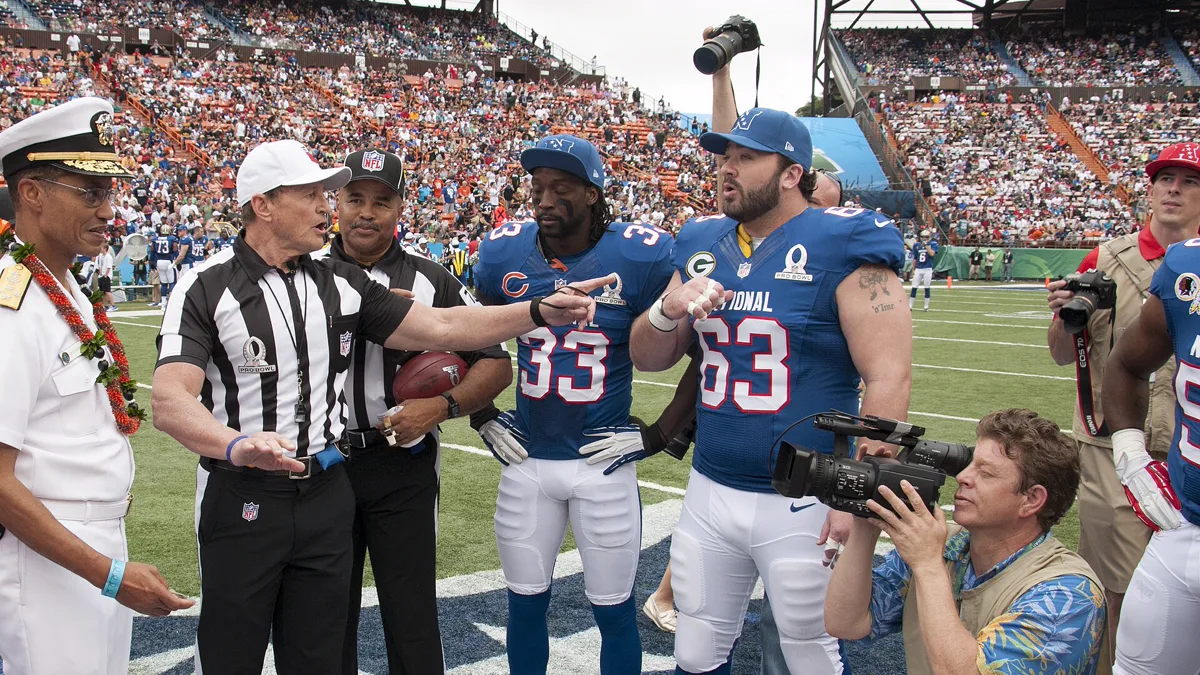
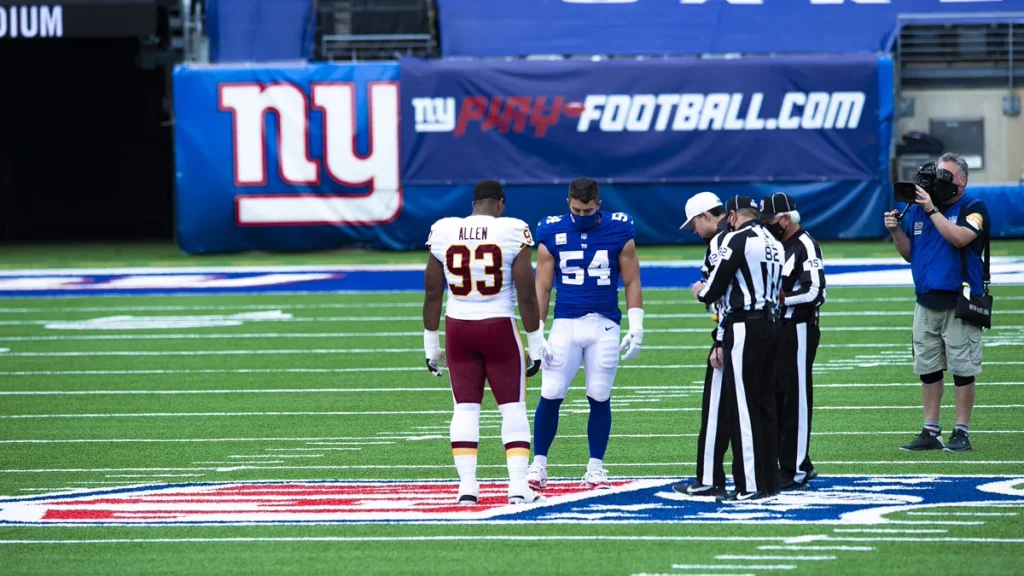
Overtime starts after a break of no more than three minutes. The referee tosses a coin, the visiting captain calls it, and the winner chooses whether to receive, kick off or defend a goal. In the regular season, one period of 10 minutes is played. Both teams are guaranteed one possession, even if the first team scores a touchdown. After both teams have had the ball, the next score of any kind wins. If the scores are still level when the 10 minutes run out, the game is a tie.
The playoffs work the same way on possession, but the clock is different: overtime periods last 15 minutes, play continues into another period if the game is still tied, and a tie is not possible. Somebody has to win.
Regular Season Overtime: 10 Minutes, Both Get the Ball
The 2025 change is the whole story of regular-season overtime. Before it, a touchdown on the first drive ended the game before the other team touched the ball. Owners approved the change on 1 April 2025, extending to the regular season the rule they had already adopted for the playoffs in 2022. The period stayed at 10 minutes, a length in place since 2017, when it was cut from 15.
Here is how a regular-season overtime period plays out:
- The coin toss decides who gets the ball first. The visiting captain calls the toss.
- The team that receives the kickoff gets the first possession. If it scores a touchdown, the game does not end. The other team gets the ball.
- If the second team also scores a touchdown to tie the game, play continues in sudden death. The next score wins.
- If the second team scores and takes the lead, it still has to survive: the first team already had its possession, so the game is already in sudden death, and the next score by either side decides it.
- If the 10 minutes run out with the scores level, the game ends as a tie. The clock is a hard cap: it is never extended so a team can finish a drive.
Each team gets two timeouts in the overtime period. There are no coach’s challenges in overtime: all reviews are started by the replay official. In the last five minutes of the period, the timing rules of the fourth quarter apply, so the clock stops on most penalties even if they are declined.
One detail catches teams out: the guarantee is one possession each, not unlimited time. A long opening drive can eat most of the 10 minutes, leaving the second team only a minute or two to answer. If time expires while that second drive is still going, the game ends with the score as it stands.
Playoff Overtime: 15 Minutes and No Ties
Playoff overtime works the same way on possession under the NFL overtime rules, but with a longer clock and no tie. Each overtime period lasts 15 minutes. Both teams get a possession, even if the first team scores a touchdown. After both teams have had the ball, the next score wins. If the game is still tied at the end of a period, another 15-minute period starts, and play goes on until somebody wins.
The reason for the difference is simple: a playoff game has to produce a winner. A regular-season game does not, so it stops after one 10-minute period. That is the only real difference between the two versions now. The possession rule, the coin toss and the sudden-death finish after both teams have had the ball are the same.
| Regular season | Playoffs | |
|---|---|---|
| Period length | 10 minutes, one period only | 15 minutes, as many periods as needed |
| Both teams get the ball? | Yes, since 2025 | Yes, since 2022 |
| First-drive touchdown ends it? | No | No |
| Can it end in a tie? | Yes | No |
| Timeouts | 2 per team in the period | 3 per team per half of overtime |
The Exceptions: When Overtime Ends Early
The guarantee of a possession for both teams has two exceptions, and both involve the defence scoring on the first possession.
If the team that kicks off scores a safety on the receiving team’s first possession, the kicking team wins at once. The receiving team never gets a second chance, because the defence scored. The same applies if the defence returns an interception or a fumble for a touchdown on that opening possession: the game is over, and the other team’s guaranteed possession never happens.
A turnover that does not score is different. If the receiving team fumbles or throws an interception and the defence recovers without scoring, both teams have now had an opportunity to possess the ball, so the game is already in sudden death. The next score wins.
There is one more way the first possession can end the game without a score. If the receiving team does not score, and the kicking team then scores on its possession, the game ends. Both teams have had their turn, and one of them leads.
The Coin Toss: What Winning It Is Worth
The coin toss matters less than it used to, and that is the point of the rule change. Under the old rule, winning the toss and scoring a touchdown on the first drive won the game outright, so the toss was worth a lot. Now the team that wins the toss still gets the ball first, but it cannot win on that drive alone.
The winner of the toss can choose to receive, kick off or defend a goal. Most teams still choose to receive, because scoring first still puts pressure on the other side. But the choice is no longer free: a team that kicks off gives the other team the first possession and takes the second one itself, knowing exactly what it needs to score. And a team that matches an opening touchdown can go for two points instead of kicking the extra point, trying to win the game on that single play rather than letting it go to sudden death.
The numbers back up the change. Under the old rule, the team that won the toss could win the game on the first drive without the other team ever touching the ball, and that happened regularly. Now the toss winner still gets the ball first, but it cannot win on that drive alone.
NFL Overtime History: How the Rule Changed
| Year | Change |
|---|---|
| 1974 | Sudden-death overtime is introduced: 15 minutes, first score wins |
| 2010 | Modified sudden death for the playoffs: a first-drive field goal no longer ends the game (regular season follows in 2012); a touchdown still does |
| 2017 | The regular-season period is cut from 15 minutes to 10 |
| 2022 | Playoffs: both teams are guaranteed a possession, after the Chiefs beat the Bills 42-36 in overtime without Buffalo touching the ball |
| 2025 | Regular season: the same guarantee applies, approved by owners on 1 April 2025 |
The 2022 game is the one fans remember. In the AFC divisional round on 23 January 2022, Kansas City beat Buffalo 42-36 in overtime. The Bills never got the ball: the Chiefs won the toss, drove down the field and scored a touchdown, and the game was over. The outcry after that game led owners to change the playoff rule within weeks. It took three more years for the same change to reach the regular season.
Before 2010, the rule was even simpler and harsher: any score on the first drive, even a field goal, won the game. The 2010 change fixed the field-goal part but left the touchdown loophole in place for another 15 years in the regular season.
What a Tie Means in the Standings
A tie is a real result, not a game that gets replayed. In the standings it counts as half a win and half a loss, which is why a team’s record can read 9-7-1: nine wins, seven losses, one tie. Ties are rare, usually one or two a season across the whole league, but they can decide a playoff race. A team that ties instead of losing gains half a game on its rivals, and a team that ties instead of winning loses half a game.
That is also why teams play for the tie late in overtime. With a minute left and the scores level, a team deep in its own half will often run the ball and let the clock die rather than risk a turnover that hands the other team a winning field goal. A tie is worth more than a loss.
FAQs
Does the first team to score a touchdown win in overtime?
No, not since the 2025 rule change. The other team still gets a possession. The game only ends early if the defence scores on the first possession, with a safety or a return touchdown.
How long is NFL overtime in the regular season?
One period of 10 minutes, and no more. If the scores are level when the clock runs out, the game is a tie, even if a team is in the middle of a drive.
How long is NFL overtime in the playoffs?
Each period lasts 15 minutes, and there is no tie. If the game is still level after one period, another period starts until somebody wins.
Can an NFL game end in a tie?
Yes, in the regular season. If the 10-minute overtime period ends with the scores level, the game is recorded as a tie. Playoff games cannot end in a tie.
Who gets the ball first in overtime?
The winner of the coin toss decides. The visiting captain calls the toss, and the winner usually chooses to receive. Choosing to kick gives the other team the first possession and keeps the second one for yourself.
How many timeouts does each team get in overtime?
Two in the regular-season overtime period. In the playoffs, each team gets three timeouts per half of overtime.
Final Thoughts
The NFL overtime rules are finally simple to state: both teams get the ball, then the next score wins. The regular season stops after 10 minutes while the playoffs keep going.
The hard part is remembering that the rule you learned a few years ago is out of date. A first-drive touchdown no longer ends the game, a tie is a real result in the regular season, and the coin toss is worth less than it was. If you watch a game go to overtime this season, expect both offences to get their chance, and expect the team that answers a touchdown to think hard about going for two.
Sources: NFL Football Operations, NFL Rulebook Rule 16 (NFL Rulebook) and NFL 2025 Rules Changes (2025 Rules Changes).