Mohammad Haris: “Mr Google” and the Fearless Generation
Pakistan’s white-ball cricket has spent years being criticised for playing it too safe — anchored around caution rather than genuine counter-attack. Mohammad Haris represents something like the deliberate opposite of that instinct: a wicketkeeper-batter who walks to the crease looking to dominate from the very first ball, regardless of situation or reputation of the bowler he’s facing.
Mushtarzai, and the nickname that stuck
Haris was born on 30 March 2001 into a Pashtun family in Mushtarzai, a village close to Peshawar. He learned the game at Peshawar’s Maazullah Khan Cricket Academy before being selected for the Peshawar Under-19 side, and a year later, the national Under-19 team. His nickname, “Mr Google,” dates back to his Under-19 days — a reflection of his curiosity and general knowledge that teammates and coaches evidently found notable enough to stick with him permanently, even as his cricket became the far more prominent part of his public identity.
He’s occasionally been compared to former Pakistan international Mohammad Yousuf for similarities in batting technique — an interesting comparison given how differently the two players’ overall games and eras have played out, but one that speaks to something distinctive in his shot-making that observers have picked up on.
A World Cup call-up before senior international debut
Haris was named in Pakistan’s squad for the 2020 Under-19 Cricket World Cup in December 2019, and made his Twenty20 debut for Khyber Pakhtunkhwa in the 2020-21 National T20 Cup that October — the beginning of a domestic career built almost entirely around aggressive, high-risk, high-reward batting rather than cautious accumulation.
Peshawar Zalmi, and turning heads immediately
Picked up by Peshawar Zalmi in the PSL, Haris had to wait for his opportunities initially, but when they came, he made an immediate impact. In the 2022 PSL, his explosive top-order batting became one of the season’s defining storylines — a 27-ball 49 against Karachi Kings stitched together with audacious pulls and fearless lofted drives, and a 32-ball 70 against Islamabad United that tore into the opposition attack. His strike rate across that season climbed beyond 180, numbers that made analysts sit up and take proper notice of a genuinely different kind of Pakistani batter — one who simply didn’t bat with fear of failure the way the format’s more cautious tradition often demanded.
International debut, and an instant statement
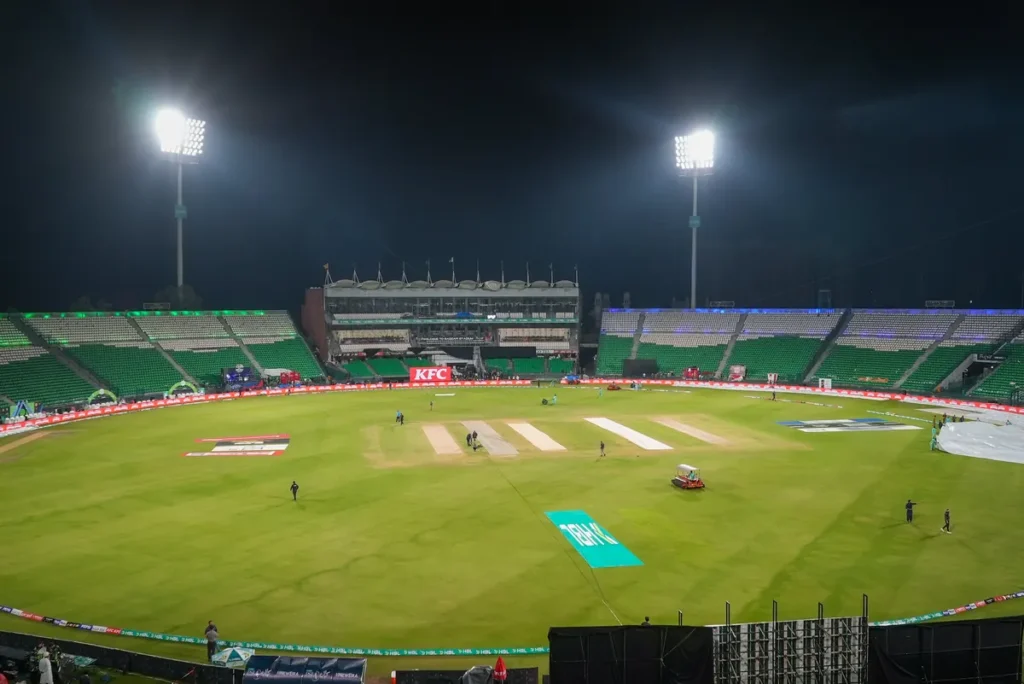
Haris made his ODI debut against West Indies on 8 June 2022 in Multan — also his full international debut for Pakistan — and his T20I debut followed against England on 30 September 2022 at Gaddafi Stadium in Lahore. That T20I debut produced an immediate flash of what he’d bring to the side: opening the batting, he scored 7 off 5 balls, highlighted by a straight six off Richard Gleeson before being dismissed. It wasn’t a big score, but it was exactly the kind of fearless statement of intent that had already defined his domestic reputation.
A World Cup breakout, even from the fringes
Drafted relatively late into Pakistan’s 2022 T20 World Cup squad, Haris didn’t play every match, but his cameos left a real impression on the public imagination. Against South Africa, a rapid 28 off 11 balls helped turn the tide of the game. In the semi-final against New Zealand, his fearless approach visibly rattled experienced bowlers at a crucial stage of the tournament. He didn’t play the final against England, but fans and commentators widely credited his energy and momentum-shifting cameos as part of the reason Pakistan reached that final at all — a genuinely significant contribution for a squad member who barely featured in the starting XI.
The record-breaking innings that arrived later
In June 2025, in the final T20I of Bangladesh’s tour of Pakistan, Haris hit his maiden T20I century — and in doing so became the first non-opener from Pakistan to ever score a T20 century, a genuinely significant record given how heavily T20 centuries are typically concentrated among openers who face the most balls and the freshest bowling. It was a landmark moment that validated years of aggressive middle-order batting, proving the approach could translate into the format’s biggest individual milestone even from a position lower down the order.
Numbers that reflect the boom-or-bust reality
As of late 2025, Haris had played 35 T20Is, accumulating 555 runs at an average of 18.12 but a strike rate of 136.36 — numbers that capture exactly the trade-off his style represents. The average is modest by conventional standards; the strike rate reflects a batter capable of completely changing a game’s momentum in a handful of overs when it comes off. Notable contributions have included a quick 31 off 18 against Bangladesh in 2022 that aided a chase, and 28 off 11 in a high-pressure situation against West Indies — consistently the kind of short, explosive cameos that define an X-factor player rather than a steady accumulator.
Growing into a genuine all-format contributor
A pivotal domestic moment arrived in the 2025-26 Quaid-e-Azam Trophy, where Haris scored his maiden first-class century — 100 not out off 113 balls against Sialkot, batting at number seven, helping Khyber Pakhtunkhwa to a declaration at 376 for 5 alongside Mohammad Rizwan’s own century in the same innings. It was a genuine sign of his game developing a more patient, longer-format dimension alongside his established white-ball explosiveness — the kind of maturation selectors like to see from a young player still establishing his complete game across formats.
Captaincy of Peshawar Zalmi
On 29 December 2025, Haris replaced Babar Azam as captain of Peshawar Zalmi ahead of the 2026 PSL season — a genuinely significant elevation, taking over leadership of a major franchise from one of Pakistan’s biggest cricketing names. It reflects real confidence in Haris’s growing standing within the game, moving him from promising X-factor batter to a player trusted with genuine leadership responsibility at just 24 years old.
What makes him different
Haris isn’t content with nudging singles or building an innings cautiously, even facing his first ball of a match — a genuinely bold, occasionally reckless approach that separates him from more conventional Pakistani batting traditions. His wicketkeeping adds another dimension of value, giving Pakistan’s selectors flexibility to use him either as a specialist keeper-batter or purely as an aggressive top-order option depending on team balance needs. Inconsistency, inevitably, has followed from that same fearless approach — attacking batters who take risks from ball one will naturally produce more low scores alongside their explosive highs, and Haris has faced his share of criticism on exactly that basis.
Where his career stands
Mohammad Haris represents something Pakistani cricket has arguably lacked for a long stretch: a genuinely fearless white-ball cricketer unafraid of failure, willing to take risks for reward rather than defaulting to safety-first caution. His maiden T20I century as a non-opener, his growing first-class contributions, and his new captaincy role with Peshawar Zalmi all suggest a career moving in the right direction — even as the boom-or-bust nature of his batting means his numbers will likely always look more volatile than a conventional accumulator’s. For a team that’s often been accused of excessive caution, Haris’s swagger represents a genuinely different template for what Pakistani white-ball batting can look like.
Quick facts
Full name: Mohammad Haris | Born: 30 March 2001, Peshawar | Role: Right-handed wicketkeeper-batter | Notable: First Pakistani non-opener to score a T20 century (2025), Peshawar Zalmi captain (2026 PSL), key contributor to Pakistan’s 2022 T20 World Cup final run, maiden first-class century batting at number seven (2025-26).
Frequently asked questions
How old is Mohammad Haris?
Born on 30 March 2001, Mohammad Haris is in his mid-twenties as of 2026.
Why is Mohammad Haris called “Mr Google”?
The nickname dates back to his Under-19 days, reflecting his curiosity and knowledge that teammates found notable.
What record does Mohammad Haris hold?
He became the first Pakistani non-opener to score a T20I century, achieved against Bangladesh in June 2025.
Which PSL team does Mohammad Haris play for, and what’s his role there?
He plays for and captains Peshawar Zalmi, having taken over the captaincy from Babar Azam ahead of the 2026 PSL season.
What is Mohammad Haris known for as a batter?
An aggressive, fearless approach from the first ball he faces, high strike rates, and useful wicketkeeping — a boom-or-bust style that trades consistency for genuine match-changing impact.
This mohammad haris biography covers his career stats and records.
Fans of this mohammad haris biography will find the latest 2026 updates here.
Bookmark this mohammad haris biography for future reference.
6 thoughts on “Mohammad Haris Biography: Age, Career, Records & Net Worth (2026)”