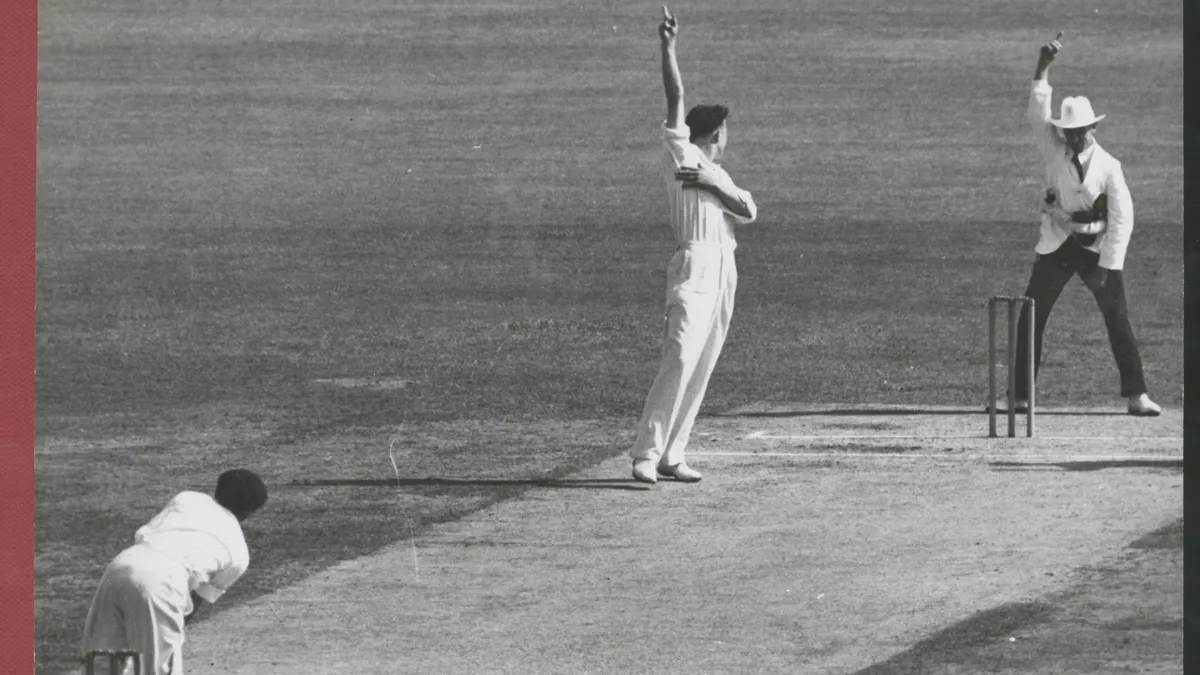
Leg before wicket — LBW — is the dismissal that produces the most reviews, the most replays and the most arguments in cricket. It is covered by Law 36 of the MCC Laws of Cricket, and although the wording is long, an umpire is really answering four questions in a split second. If the answer to all four is “yes”, the batter is out.
The four questions
1. Where did the ball pitch?
If the ball pitches outside the line of leg stump, the batter cannot be out LBW — no matter where it then hits the pad or whether it would go on to hit the stumps. A ball that pitches in line with the stumps, or outside off stump, passes this test. A full toss that never pitches also passes.
“Leg side” depends on the batter: for a right-hander it is the side behind their legs; for a left-hander it is the opposite side.
2. Did the ball hit the bat first?
If the ball touches the bat (or the glove holding the bat) before it hits the pad or body, it cannot be LBW. Inside edges onto the pad are the reason many LBW appeals are turned down on review.
3. Where did it hit the batter?
The point of impact must be between wicket and wicket — in line with the stumps. There is one important exception: if the impact is outside the line of off stump, the batter can still be out, but only if they made no genuine attempt to play the ball with the bat. That is why umpires watch closely for batters who pad the ball away without offering a shot.
Impact outside the line of leg stump is never out.
4. Would the ball have hit the stumps?
Finally, the umpire must believe that, had the batter’s body not been in the way, the ball would have gone on to hit the wicket. Height, turn and swing all matter here; a ball striking the pad high on a bouncy pitch may be judged to be going over the top.
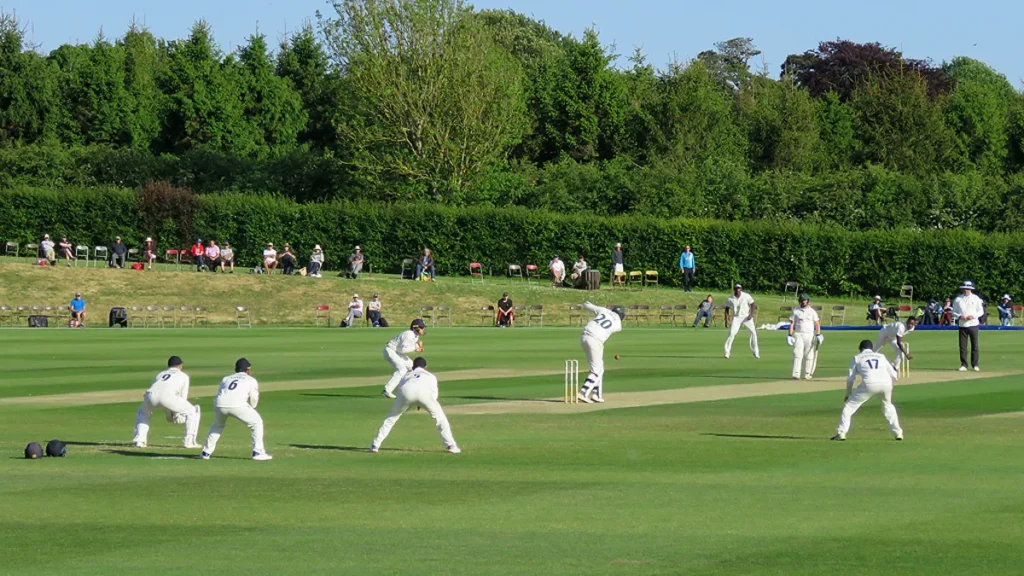
A quick flowchart
- Pitched outside leg stump? → Not out.
- Hit the bat first? → Not out.
- Impact outside leg stump? → Not out.
- Impact outside off stump and the batter played a shot? → Not out.
- Would it have missed the stumps? → Not out.
- Otherwise → Out LBW.
LBW and the Decision Review System (DRS)
In international cricket and leagues that use DRS, ball-tracking technology shows where the ball pitched, where it struck the batter and its predicted path to the stumps. Ultra-edge or similar tools check whether bat was involved.
What “umpire’s call” means
Ball-tracking is a prediction, so the ICC builds in a margin of error. When the on-field decision is reviewed:
- Impact: for an on-field “not out” to be overturned, at least half of the ball must have struck the batter within the line of the stumps.
- Wickets: for a “not out” to be overturned, at least half of the ball must be shown hitting within the zone around the stumps used for review — under current ICC playing conditions this zone runs from the outside of the off and leg stumps up to the top of the bails.
If the evidence falls inside those margins but is not conclusive, the result is umpire’s call: the original decision stands, whichever way it went. In international cricket the reviewing team does not lose a review when an LBW review ends in umpire’s call.
That is why the same delivery shown on two broadcasts can be “out” in one match and “not out” in another — it depends on what the on-field umpire said first.
Common LBW myths
“It hit him outside the line, so it can’t be out.”
Only true if the batter played a shot. If they kicked it away or left it with the pad, impact outside off is allowed.
“He was a long way down the pitch, so it’s not out.”
There is no distance rule in the Laws. A long stride makes the umpire less certain about the ball’s path, which is why many such appeals are turned down, but a batter can be given out wherever they are standing.
“Pitching outside off means not out.”
No — only pitching outside leg rules out LBW. A ball pitching outside off and coming back in is a classic LBW dismissal.
Why LBW matters tactically
Bowlers attack the stumps precisely because LBW and bowled are both in play. Spinners who turn the ball into the batter and fast bowlers who swing it late are especially dangerous, while batters reduce the risk by playing with the bat in front of the pad and getting forward to smother movement.
Follow every wicket, review and dismissal type ball by ball on our cricket live score page.
Frequently asked questions
Can you be out LBW off a no-ball?
No. A batter cannot be dismissed LBW from a no-ball.
Can you be out LBW if the ball hits your helmet or body rather than your pad?
Yes. Law 36 refers to the ball hitting the batter’s person, which includes any part of the body or equipment other than the bat and the glove holding the bat.
Does a review get lost on umpire’s call?
In international cricket under current ICC playing conditions, an LBW review that returns umpire’s call does not cost the team that review.