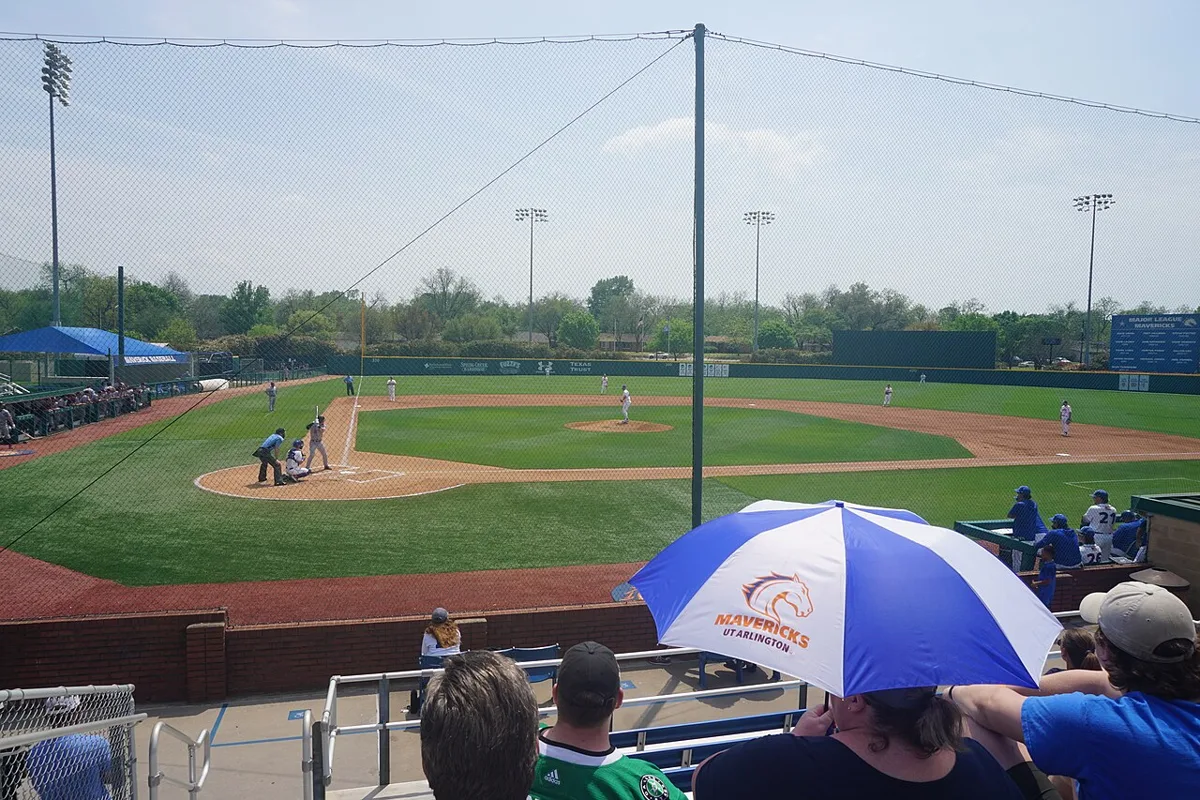
This baseball guide for beginners covers everything you need to enjoy your first game: the rules, the positions, how scoring works, and the terms everyone uses. Baseball can look slow or confusing from the outside, but once you understand what is happening on each pitch, every at-bat becomes a small battle of strategy. For live scores and results from every game, see our baseball scores and news hub.
Baseball Guide for Beginners: The Basics in 2 Minutes
Here is the whole game in one paragraph: two teams take turns batting and fielding. The batting team tries to score runs by hitting the ball and running around four bases. The fielding team tries to record three outs to end the half-inning. A game lasts 9 innings, and the team with more runs at the end wins.
If you only remember three numbers, remember these: 9 players on the field, 9 innings in a game, and 3 outs per half-inning. Everything else in baseball builds on that foundation.
The Object of the Game
The object is simple: score more runs than the other team. A run is scored when a batter becomes a runner, touches first base, second base, third base, and then home plate, in that order. A batter can circle all four bases on one swing—that is a home run—or advance one base at a time as teammates behind him get hits.
Each inning has two halves. In the top of the inning, the visiting team bats while the home team fields. In the bottom, they swap. After 9 innings, the team with more runs wins. If the score is tied, the game goes to extra innings until someone wins.
Baseball Positions Explained
Nine players take the field for the defending team. Each position has a job:
| Position | Where they stand | Main job |
|---|---|---|
| Pitcher | On the mound | Throws the pitch to the batter |
| Catcher | Behind home plate | Catches pitches, calls the game |
| First base | Near first base | Catches throws for outs at first. |
| Second base | Between first and second | Covers second, turns double plays |
| Third base | Near third base | Guards the “hot corner” |
| Shortstop | Between second and third | Fields most ground balls. |
| Left field | Outfield, left side | Catches fly balls, backs up throws |
| Center field | Outfield, middle | Covers the most ground in the outfield |
| Right field | Outfield, right side | Strong throwing arm to third base |
The infield (pitcher, catcher, four infielders) handles ground balls and close plays. The outfield (three outfielders) handles fly balls and long hits. In leagues that use the designated hitter (DH)—MLB has used it in both leagues since 2022—a 10th player bats in place of the pitcher, but the fielding side still fields 9 players.
How Scoring Works
Scoring in baseball is measured in runs, and the scoreboard tracks much more than the final score:
- Runs—the only number that decides the winner.
- Hits—times a batter reached base on a batted ball.
- Errors—mistakes by the fielding team that let a runner advance.
- Innings—the game is divided into 9; the scoreboard shows runs per inning.
A single game can end 2-1 (a pitcher’s duel) or 12-10 (a slugfest). What matters most is not how many hits a team gets, but when they get them—a hit with runners on base is worth far more than a hit with the bases empty. That is why you will hear commentators talk about “clutch hitting” and “runners in scoring position.”
Basic Rules Every Beginner Should Know
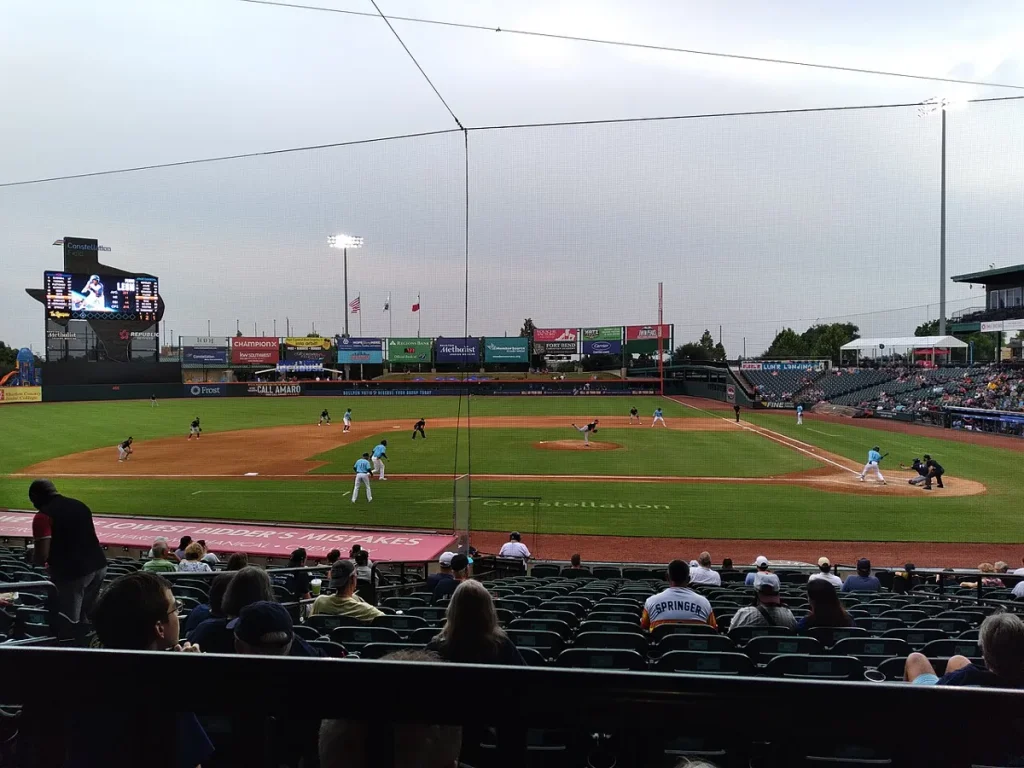
These are the rules that explain 90% of what you see:
- Strikes and balls—A pitch in the strike zone that the batter does not hit is a strike. A pitch outside the zone is a ball. Three strikes and the batter is out; four balls and the batter walks to first base.
- Foul balls—A ball hit outside the foul lines is foul. A foul counts as a strike, except a batter cannot strike out on a foul ball (with two strikes already, fouls do not count).
- Force outs vs. tag outs—If a runner must advance (because the batter is coming behind him), the fielder only needs to touch the base with the ball. Otherwise, the fielder must tag the runner.
- Tagging up—On a caught fly ball, a runner must return to his base and can only advance after the catch.
- Home runs—A ball hit over the outfield fence in fair territory is a home run. The batter and any runners on base all score.
- Three outs—Each half-inning ends after three outs. Outs come from strikeouts, caught fly balls, force outs, and tag outs.
Baseball Terms Beginners Hear All the Time
Commentators use a lot of shorthand. Here are the terms you will hear in every broadcast:
- RBI — Run Batted In. A batter earns an RBI when his hit, walk, or sacrifice causes a run to score.
- ERA—Earned Run Average. How many earned runs a pitcher allows per 9 innings. Lower is better.
- Batting average—Hits divided by at-bats. A .300 average is excellent. 250 is around average.
- Walk (BB) — The batter takes first base after four balls.
- Strikeout (K) — The batter is out after three strikes.
- Stolen base — A runner advances to the next base while the pitcher is throwing.
- Double play — Two outs on one play, usually a ground ball to an infielder.
- Grand slam—A home run with the bases loaded, scoring four runs.
- Bullpen—The relief pitchers and the area where they warm up.
- No-hitter—A game in which one team gets no hits.
How to Watch Your First Baseball Game
Watching baseball is easier when you know what to follow on each pitch:
- Watch the count—the balls-strikes count (shown as “2-1” or “0-2”) tells you who has the advantage. A 3-0 count favors the batter; an 0-2 count favors the pitcher.
- Watch the runners—runners on base change everything. A runner on second with no outs is a scoring threat; bases empty with two outs is a much weaker situation.
- Follow the score and inning—The score, inning, and outs tell you how much pressure each pitch carries. A one-run game in the 9th inning is far more tense than a one-run game in the 2nd.
- Start with highlights—If a full game feels long, watch a 10-minute highlight reel first. You will see the biggest moments without the quiet stretches.
Google’s own help pages explain how to find what you want on Google News and how to customize what you find on Google News—follow baseball as a topic and your favorite teams, and the stories come to you. Bookmark PinLivescore baseball for scores while you watch.
Related baseball guides: How many players on a baseball team? · How to read baseball scores
Final Thoughts
Baseball is a simple game wrapped in a lot of tradition: 9 players, 9 innings, 3 outs, and a race to score more runs than the other team. Learn the count, watch the runners, and follow the score—and a game that once looked slow will start to feel like the chess match it really is. Watch one full game with this guide in mind, and you will understand more baseball than most casual fans ever do.
FAQs
How long is a baseball game?
An MLB game usually lasts about 2.5 to 3 hours. There is no clock in baseball—the game ends after 9 innings (or extra innings if tied), not when time runs out.
How many innings are in a baseball game?
Nine innings in MLB and most professional baseball. Some youth leagues and college doubleheaders play 7 innings. If the score is tied after 9, the game continues into extra innings.
What is a strike in baseball?
A strike is a pitch in the strike zone that the batter does not hit, a pitch the batter swings at and misses, or a foul ball (except with two strikes already, when a foul does not count as a third strike). Three strikes and the batter is out.
What does RBI mean?
RBI stands for Run Batted In. A batter earns an RBI when his at-bat causes a run to score—usually with a hit, but also with a bases-loaded walk, a sacrifice fly, or a groundout that brings a runner home.
How many players are on a baseball team?
Nine players take the field at a time, 26 players are on an MLB active roster (28 in September), and 40 players are on the full roster. The 9 on the field never changes—everything else is roster management.