
What is Super Over in cricket? It is the one-over tie-breaker used when a limited-overs match ends with both teams on the same score. Each side bats for one over of six balls, and the team that scores more runs in that over wins the match. It applies in T20 and one-day cricket, never in Test cricket, where a tie stays a tie. If you follow tied games on our cricket live score page, the Super Over is the six-ball shootout that decides them.
A Super Over is not a full extra innings. It is a short, fixed contest with its own rules on batting order, wickets, and what happens if it also ends level. The DLS method settles rain-shortened games, and net run rate separates teams that finish level on points. A Super Over settles something different: two teams that finish level on runs in the same match.
What Is Super Over in Cricket?
A Super Over is a one-over eliminator. When the main match ends in a tie, each team plays a single additional over of six legal balls to determine the winner. The team scoring the most runs in that over is declared the winner, no matter how many wickets each side loses along the way.
The format was first used in 2008 in Twenty20 cricket, replacing the bowl-out that had been used to break a tie. It has since become the standard tie-breaker in ICC white-ball cricket and in most professional T20 leagues, including the IPL, where a Super Over win can move a team up the IPL points table, and the BBL.
The rules come from the ICC playing conditions, not from the Laws of Cricket themselves. The Laws say only that a match is tied when the scores are equal. Whether a Super Over is played depends on the playing conditions of that match or tournament.
Super Over Rules in 6 Simple Steps
These rules are the practical answer to what is super over in cricket, and every part of them matters when six balls decide a match. The table below gives the full picture at a glance.
| Element | Rule |
|---|---|
| Length | One over of six legal balls per side |
| Wickets | Losing two wickets ends that side’s innings at once |
| Winner | Most runs wins, no matter how many wickets were lost |
| Who bats first | The team that batted second in the main match |
| Fielding | The same fielding restrictions as the last over of the match |
| Timing | Starts five minutes after the match ends |
Here is how it plays out, step by step. First, the team that batted second in the main match bats first in the Super Over, so the chase and the defence swap around. The fielding side chooses which end to bowl from and picks a used match ball. No new ball is used.
Second, each side faces one over. Wides and no-balls are re-bowled and do not count towards the six legal balls, and all extras count as they do in normal play. A no-ball in a T20 brings a free hit on the next ball.
Third, the innings ends after six legal balls or after two wickets, whichever comes first. With only two wickets in hand, a second dismissal leaves nobody left to come in. That is why captains send their cleanest hitters first and keep a second hitter ready.
Fourth, the side with more runs wins. Wickets do not decide it. A team that scores 16 for 2 beats a team that scores 15 for 0. The margin is runs only.
What Happens If the Super Over Is Tied?
If the Super Over itself ends level, another Super Over is played, and this repeats until there is a winner. That is the rule now, but it was not the rule in 2019. The change came after the most famous tied Super Over in cricket history, explained in the next section.
Four things change in a repeat Super Over. The side that batted second in the previous Super Over bats first in the next one. The fielding team bowls from the opposite end. Each team reuses the ball it chose the first time. And two groups of players are locked out: any batter dismissed in a previous Super Over cannot bat again, and any bowler who bowled the previous one cannot bowl the next.
There are only two ways a tied match can now stay tied. If the Super Overs are abandoned before they can be completed, because of weather, light, or time, the match is declared a tie. And where there is a hard curfew, such as floodlights that must go off, the match referee may cap the number of Super Overs. Outside those cases, the overs keep coming until one side wins.
Super Over vs a Tie: When It Is Not Used
A Super Over is not played after every tied game. In Test cricket there is no Super Over at all. A tied Test is a legitimate result and stays on the record. The format exists only in limited-overs cricket.
Even in white-ball cricket, a tied bilateral one-day match is often just a tie. A Super Over happens only where that match or tournament’s playing conditions call for one. Knowing what is super over in cricket also means knowing where it does not apply. In league play, a tied game may also stay tied in the group stage of some tournaments, while knockout games go to a Super Over. The rule that matters is always the one written for that competition, so a tied score on the scorecard does not by itself guarantee a Super Over.
Super Over runs and wickets are also not added to a player’s career statistics. The Super Over is not considered part of the main match, so a fifty scored in the main game stays as it was, and the six balls do not change any career total.
3 Famous Super Over Finishes
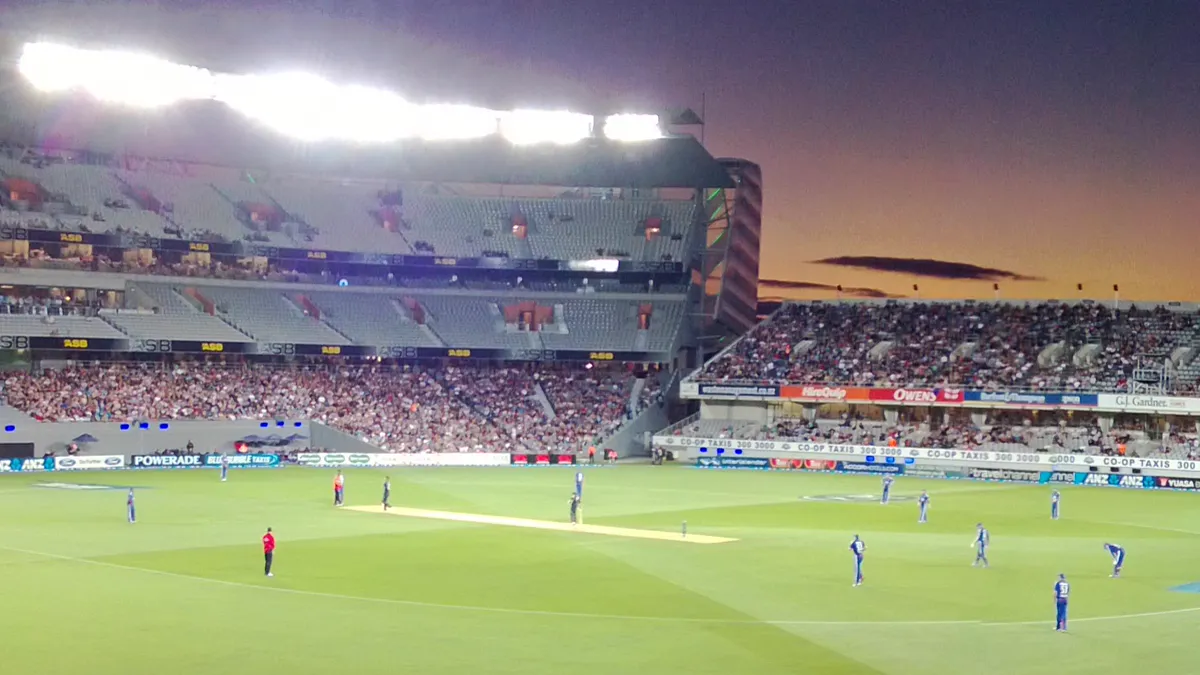
The three finishes below show what is super over in cricket at its best, and at its most argued-over.
The first Super Over in international cricket was played on 26 December 2008 at Eden Park in Auckland. New Zealand and West Indies had finished level on 155 in a T20 international. West Indies scored 25 for 1 in their over, with Chris Gayle hitting every one of the 25 runs off Daniel Vettori, including three sixes and a four. New Zealand replied with 15 for 2 from five balls and lost. Gayle’s 25 is still the most any side has made in a men’s T20I Super Over.
The most famous Super Over of all came in the 2019 World Cup final at Lord’s on 14 July 2019. England and New Zealand both scored 241 in 50 overs. In the Super Over, both sides scored 15, England 15 for 0 and New Zealand 15 for 1. Under the rule of the time, a tied Super Over was decided by boundary count, and England won 26 boundaries to 17.
It was the first Super Over in a one-day international, and the first and only time a World Cup was decided by boundary count. It is also the match that taught most fans what is super over in cricket. In October 2019 the ICC scrapped the boundary count rule and replaced it with repeated Super Overs until one side wins.
The third finish shows how quickly a Super Over can turn. In the third T20I at Hamilton on 29 January 2020, India and New Zealand both scored 179. New Zealand made 17 for 0 in the Super Over off Jasprit Bumrah. India needed 10 from the last two balls, and Rohit Sharma hit two sixes off Tim Southee to win it 20 for 0 and seal the series 3-0. It remains one of the best Super Over chases in T20 internationals.
| Match | Date | Super Over score | Result |
|---|---|---|---|
| New Zealand vs West Indies, Eden Park | 26 Dec 2008 | WI 25/1, NZ 15/2 | West Indies won |
| England vs New Zealand, Lord’s, World Cup final | 14 Jul 2019 | ENG 15/0, NZ 15/1 | England won on boundary count |
| New Zealand vs India, Hamilton | 29 Jan 2020 | NZ 17/0, IND 20/0 | India won |
FAQs
How many balls are in a Super Over?
Six legal balls per side. Wides and no-balls are re-bowled and do not count towards the six. The innings ends early if the batting side loses two wickets.
Who bats first in a Super Over?
The team that batted second in the main match bats first in the Super Over. In a repeat Super Over, the side that batted second in the previous Super Over bats first.
What happens if the Super Over is tied?
Another Super Over is played, and this repeats until there is a winner. That repeat rule is now central to what is super over in cricket. The boundary count rule that decided the 2019 World Cup final was scrapped in October 2019 and is no longer used.
Is there a Super Over in Test cricket?
No. There is no Super Over in Test cricket. A tied Test is a valid result and stays a tie. The Super Over applies only in limited-overs cricket, and only where the playing conditions call for one.
Do Super Over runs count in a player’s career stats?
No. A Super Over is not considered part of the main match, so the runs scored and wickets taken in it are not added to a player’s career statistics.
What is the highest score in a Super Over?
In men’s T20 internationals, the highest team score in a Super Over is 25 for 1, made by West Indies against New Zealand in the first ever Super Over on 26 December 2008. Chris Gayle scored all 25 runs.
Final Thoughts
That is what is super over in cricket in short: six balls, two wickets in hand, and runs as the only measure. The team that batted second goes first, the team with more runs wins, and a tied over simply brings another one. The boundary count that decided the 2019 World Cup is gone, and the rule now is simple: keep playing until one side wins.
For fans, the lesson is just as simple. When a limited-overs scorecard shows a tie, do not close the page. The match is not over. The Super Over is about to start, and six balls are enough to settle it.
Follow every tied finish live on our cricket live score page, and check the IPL points table to see where a Super Over win leaves each team in the race.
Sources: Super Over rules and history and 2019 World Cup final, tied match and Super Over.